
- Introduction
- What is a Scotch Egg?
- Ingredients Required
- Step-by-Step Cooking Instructions
- Preparing the Hard-Boiled Eggs
- Making the Sausage Mixture
- Assembling the Scotch Eggs
- Breading the Scotch Eggs
- Deep-Frying the Scotch Eggs
- Serving Suggestions
- Variations of Scotch Eggs
- Tips for Perfect Scotch Eggs
- History of Scotch Eggs
- Why Make Scotch Eggs at Home?
- Frequently Asked Questions (FAQs)
- FAQ 1
- FAQ 2
- FAQ 3
- FAQ 4
- FAQ 5
- Conclusion
Introduction
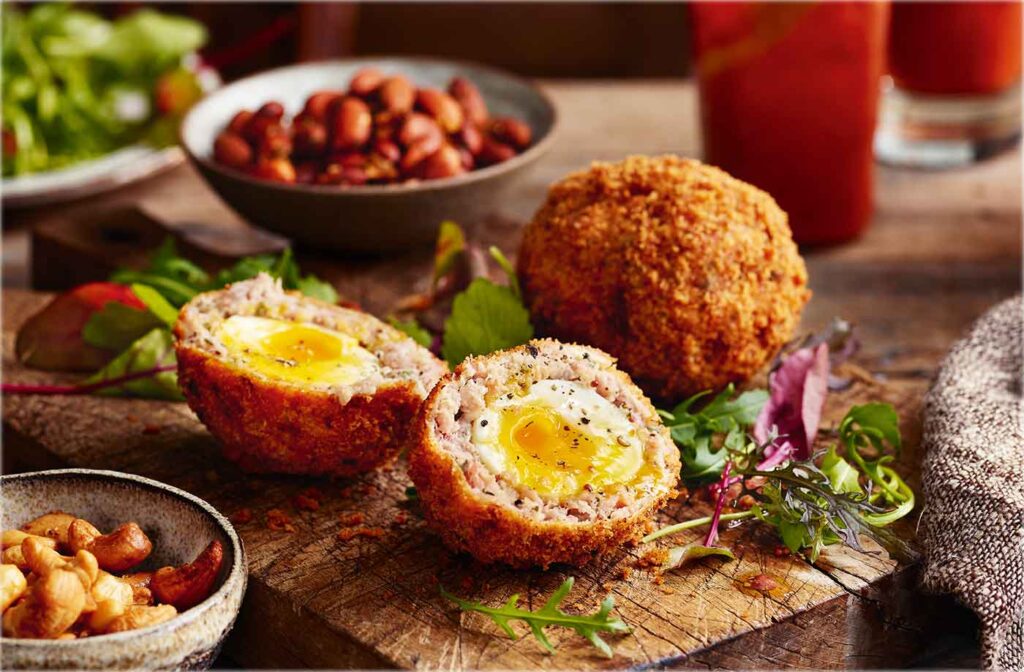
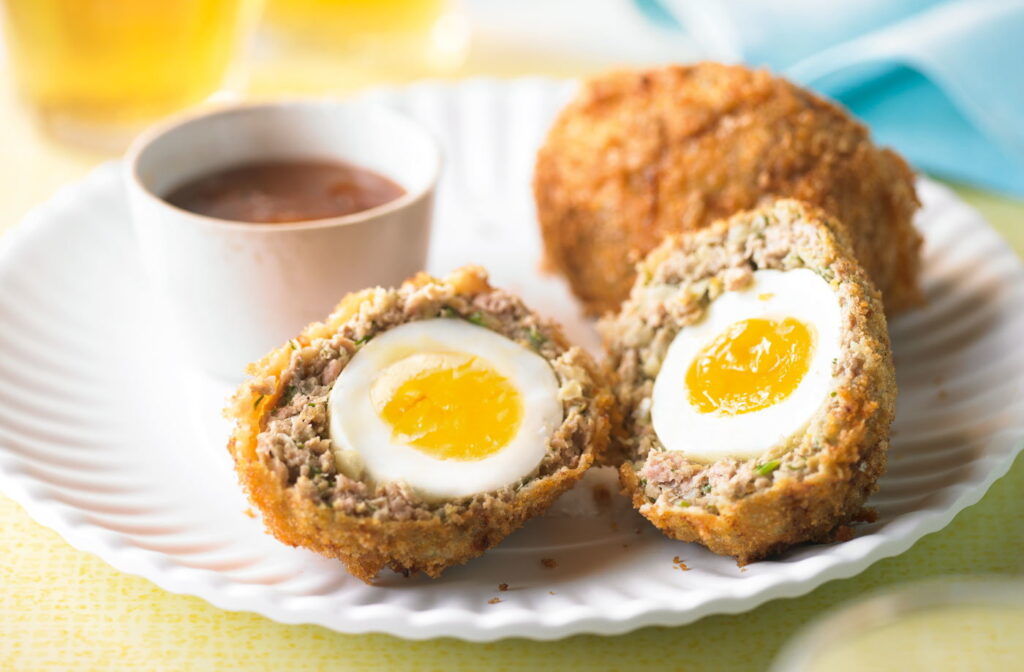
Scotch egg are a delightful and classic British snack that has stood the test of time. A perfect blend of flavors and textures, they consist of a hard-boiled egg enveloped in seasoned sausage meat, coated with breadcrumbs, and then deep-fried to a crispy golden perfection. Making Scotch eggs at home in 2023 is easier than ever, and in this article, we’ll guide you through the step-by-step process to create this delectable treat in your own kitchen.

What is a Scotch Egg?
A Scotch egg is a traditional British dish with a rich history that dates back to the 18th century. Its origin is often attributed to Fortnum & Mason, the prestigious London department store, where they were created as a convenient snack for travelers. Over the years, Scotch eggs have evolved into a popular picnic snack, party appetizer, and even a satisfying meal.
Ingredients Required
To make Scotch eggs at home, you’ll need the following ingredients:
- Large eggs (fresh and preferably free-range)
- Sausage meat (pork or a combination of pork and beef)
- Breadcrumbs (preferably Panko for extra crunch)
- All-purpose flour
- Milk
- Dijon mustard
- Salt and pepper
- Vegetable oil (for deep-frying)
Step-by-Step Cooking Instructions
1. Preparing the Hard-Boiled Eggs
Start by placing the eggs in a single layer in a saucepan and cover them with cold water. Bring the water to a boil and let it cook for about 8-10 minutes. Once done, transfer the eggs to an ice water bath to cool. Peel the eggs carefully and set them aside.
2. Making the Sausage Mixture
In a mixing bowl, combine the sausage meat, a pinch of salt and pepper, and a tablespoon of Dijon mustard. Mix well until all the ingredients are thoroughly combined.
3. Assembling the Scotch Eggs
Take a portion of the sausage mixture and flatten it in your palm. Place a peeled hard-boiled egg in the center and carefully mold the sausage meat around it, ensuring the egg is completely covered.
4. Breading the Scotch Eggs
In three separate shallow dishes, place the all-purpose flour, beaten eggs, and breadcrumbs. Roll each Scotch egg in flour, dip it in the beaten eggs, and then coat it generously with breadcrumbs, pressing gently to adhere.
5. Deep-Frying the Scotch Eggs
Heat vegetable oil in a deep fryer or a deep, heavy-bottomed pan to 350°F (175°C). Carefully lower the breaded Scotch egg into the hot oil and fry until they turn a deep golden brown, approximately 5-6 minutes. Remove them with a slotted spoon and drain on a paper towel.
Serving Suggestions
Scotch eggs are delicious on their own, but they can be elevated to new heights with accompaniments like tangy chutneys, pickles, or a fresh green salad. For a hearty meal, serve them with mashed potatoes and gravy.
Variations of Scotch Eggs
Get creative with Scotch eggs by trying different variations. You can experiment with various types of sausage, such as chorizo or turkey, for unique flavors. Vegetarians can even substitute the sausage with a seasoned mixture of lentils and vegetables.
Tips for Perfect Scotch Eggs
- Use eggs at room temperature to prevent cracking during boiling.
- For a burst of flavors, consider adding herbs like thyme, sage, or rosemary to the sausage mixture.
- Ensure that the sausage meat covers the eggs evenly to prevent leaking during frying.
- Refrigerate the assembled Scotch eggs for at least 30 minutes before frying to help them hold their shape.
History of Scotch Eggs
Scotch eggs have a fascinating history that takes us back to the 18th century. Although their true origins may be shrouded in mystery, they remain an iconic British dish that has gained popularity worldwide.
Why Make Scotch Eggs at Home?
Preparing Scotch eggs at home allows you to control the quality of the ingredients and customize the flavors to your liking. Plus, it’s a fun and rewarding cooking project that will impress your family and friends.
Frequently Asked Questions (FAQs)
FAQ 1: Can I bake the Scotch eggs instead of frying them?
Yes, you can bake Scotch eggs for a healthier option. Preheat your oven to 375°F (190°C) and bake the eggs on a greased baking sheet for about 25-30 minutes until they are golden brown.
FAQ 2: Can I freeze Scotch eggs?
Absolutely! Once they are cooked and cooled, you can freeze Scotch eggs for up to one month. Reheat them in the oven at 350°F (175°C) for about 15-20 minutes.
FAQ 3: Can I use different types of meat for the sausage?
Yes, you can experiment with different meats like chicken, turkey, or even lamb to create your own unique twist on this classic recipe.
FAQ 4: Are Scotch eggs gluten-free?
Unfortunately, traditional Scotch eggs are not gluten-free due to the breadcrumbs. However, you can try using gluten-free breadcrumbs or almond flour as an alternative.
FAQ 5: Can I make mini Scotch eggs?
Absolutely! Simply use quail eggs instead of large eggs and reduce the cooking time accordingly for delightful bite-sized treats.
Conclusion
In conclusion, making Scotch eggs at home in 2023 is a delightful culinary adventure that yields a delicious and satisfying treat. With this simple and easy-to-follow recipe, you can now enjoy this classic British dish whenever the craving strikes. Whether it’s for a party, picnic, or a cozy night at home, Scotch eggs are sure to please both young and old alike.
So, roll up your sleeves, gather your ingredients, and embark on your Scotch egg-making journey. You’ll be rewarded with a delectable snack that will leave everyone asking for more!